



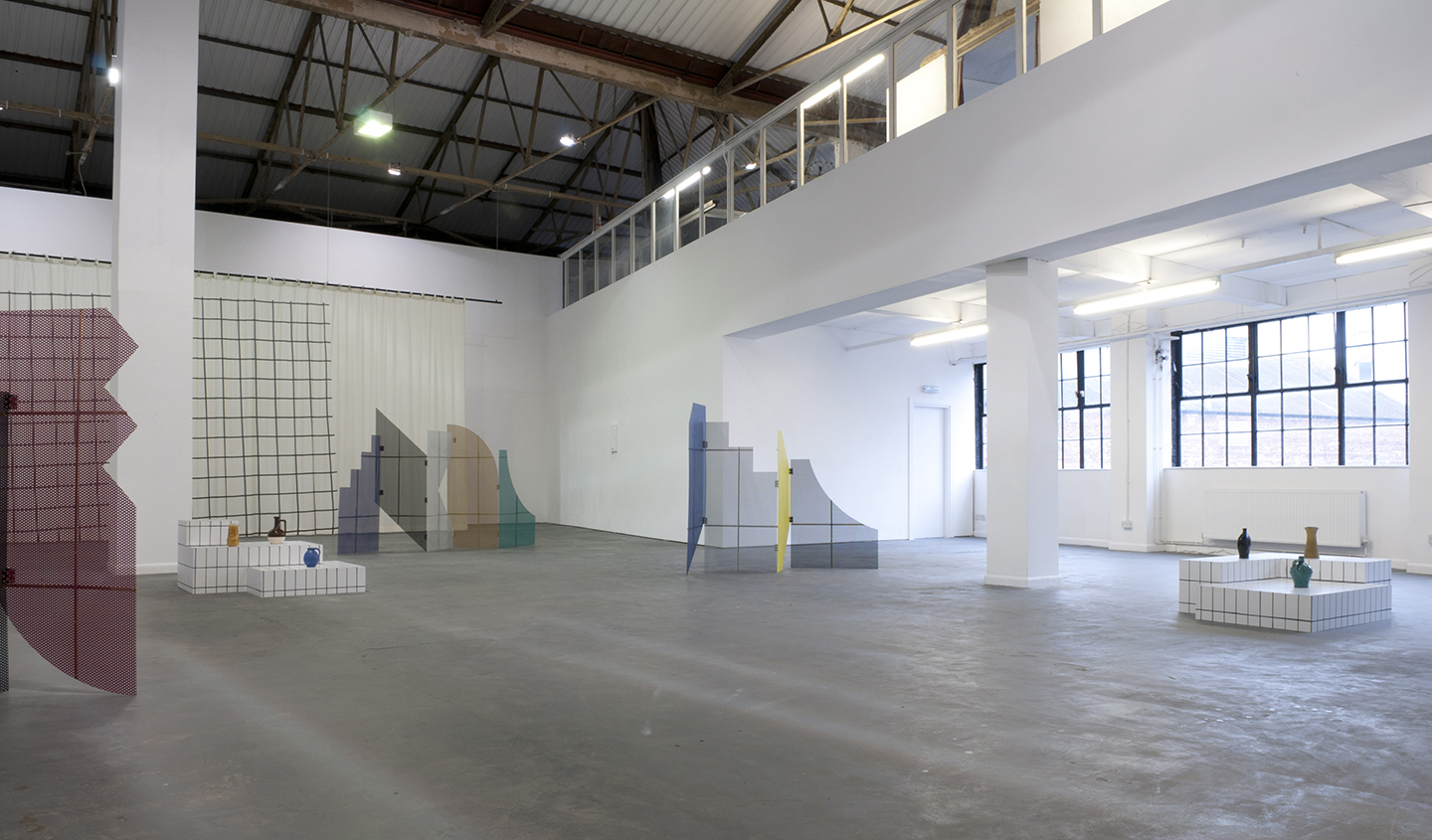
“S1 gets under your skin a bit, people stay around for a while.”
Louise Hutchinson, Artistic Director at S1 Artspace gives us a 21-year history of the artist-led space, the nightclub below, economic crashes, studio parties, challenging landlords, and a future capital project, all of which form part of S1’s legacy.
Between 1995-96, Sheffield was going through a somewhat cultural enterprising resurgence, as both Bloc Projects, which was primarily artist studios before a gallery was established in 2002, and S1 were founded. It’s the latter that has seen the greatest transition however, in terms of scale and relocations across the city. Bloc have shown the benefits of anchoring to a site, expanding the existing space and effective use of other types of space (billboards, archways) within local proximity of the gallery. S1 meanwhile, is currently occupying its third gallery venue in the city - with plans to developing a fourth and final move of the ever-expanding organisation - well under way.
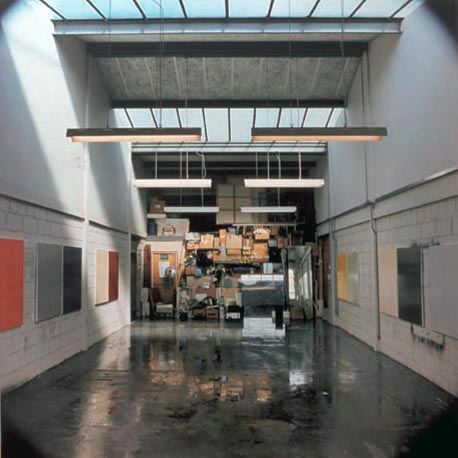
Apocotropes, Dutton & Peacock, S1 Artspace, 1995
Steve Dutton and Percy Peacock, two of the five co-founders of S1, were both Sheffield Hallam University lecturers on the Fine Art course. Taking on a 25-year lease with a private landlord (a contract virtually unheard of in today’s property asset culture), the original S1 was an industrial warehouse space above a garage, which soon became a nightclub. The warehouse split into four large bays, and exhibitions gradually began to emerge from one of the bays, which involved moving all of the studio materials every time. Martin Clark, the recent Artistic Director of Art Sheffield 16, was one of the original members and studio holders, cutting his teeth with early-curated projects at S1 in 2000.
Impressively, and what has certainly supported the development of S1 at crucial times of funding since, was the ambition to become a registered charity from the start, and forming a board of members to advise and support the organisation. “S1 didn’t have a long-term strategic plan at that time, it was more responsive and intuitive to what was going on around them.” Being accountable for your objectives and finances, “…requires an organisation to operate in a particular way and have a structure that can support this.” Formalising a governing structure in its nascent form has ensured that S1 has been in a good position to develop funding agreements, assuring that any funds invested are spent accordingly and monitored.
In 2003 and having successfully secured a Regional Arts Lottery grant, S1 appointed its first curator, Michelle Cotton, who subsequently went on to be awarded the Cubitt curatorial bursary, then senior curator at Firstsite and now Director of Bonner Kunstverein. Michelle helped shape the exhibitions programme and development opportunities for local and regional artist communities.
Routing through the old S1 website, it’s fascinating to see early works and the practices of artists who featured in exhibitions under Michelle’s curatorial direction, and who have now become internationally represented and collected. The archive includes earlier collaborations between Heather & Ivan Morison in 2004, distinctive hues of Karla Black sculptures in 2005, or the reduced formalism of a Sean Edwards shelf in 2006.
Still having access to this collection of exhibition documentation truly highlights the vitality of long-established, artist-led galleries in order for dominant art narratives of the 90’s and early 2000’s to be contested. To address the challenge of reinstating an engagement with the archive could inform and underpin the strength of artist-led practices today, yet often such histories are not made available, through lack of resources and a non-definitive overview.
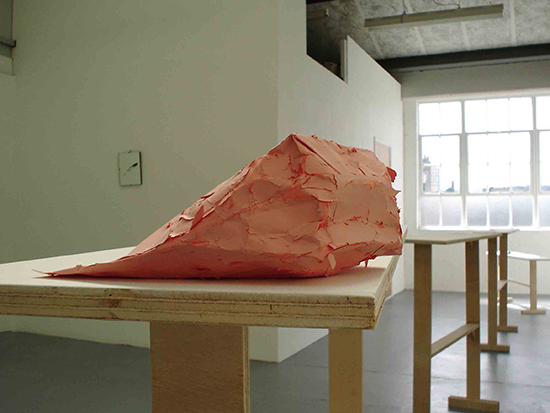
Karla Black, from Karla Black | Babak Ghazi, S1 Artspace, 2005
The S1 Associates scheme was launched in 2004, which, as is a common aspect of artist-led programmes, offered artists an exhibition opportunity each year. S1 Salon was launched too, platforming artist film and video screenings and discussion, “…which meant S1 could start to reach international artists…It has continually been about developing opportunities, with and beyond Sheffield – the Salon and Associate programmes are examples of ways small arts organisations can help create a support network for young artists.”
Sea of Goths
In 2006 when Louise was appointed curator at S1, the organisation was in its 10th year, and in a strong position to becoming firmly established as an artist-led organisation in the North. S1’s building meanwhile, was not supporting the growing ambitions of the organisation.
“Being above a nightclub, a thrash metal one to boot, with no heating, poor access and limited visibility, was a hostile space to work and visit."
"The entrance was through the rear courtyard of the nightclub, which was also its bin store, car-park and would often smell of the previous night’s alcohol, then when you did find S1’s black door behind all this, you’d have to buzz for someone from upstairs to come down and let you in. There couldn’t have been any more barriers – when the building was originally taken on, it wasn’t intended to be a public space.”
A major impact during S1’s original tenancy was the Government Smoking Ban which came in in 2007. “Being above a nightclub now meant that the courtyard and our entrance were now the designated smoker’s area. Leaving S1 at night involved negotiating your way through a sea of goths and rockers - and the morning after - our entrance was covered in all manner of grime and filth - we had to move!”
The space had become increasingly problematic to invite guests or the public to, and even too difficult to work in. Louise described that migraines became a regular occurrence due to the intense sound checks in the nightclub below, which could start as early as 11am and often go on all day. “We would have left sooner, but ended up in a drawn out legal battle with the landlord as there was still 14 years remaining on the lease and no break clause. Because of all the issues, we were eventually able to negotiate a termination of the lease and finally relocate.”
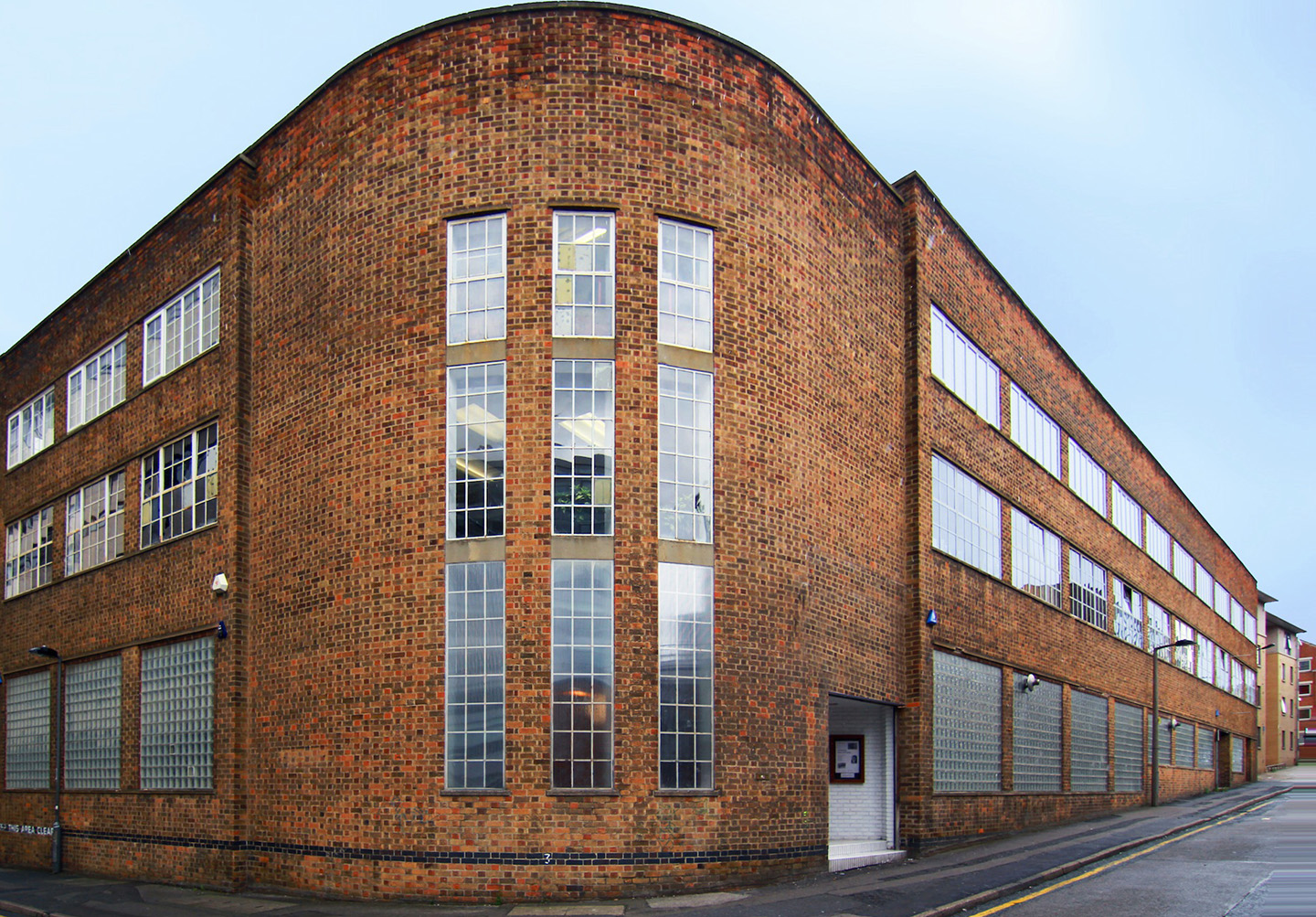
Trafalgar House, S1 Artspace, 2010
Much of the post-industrial and vacant retail property around the city had been sold by Sheffield City Council in light of the £25m annual repayments that were due, in order to pay off the World Student Games, hosted in 1991 (a total debt of £658m, expected not to be cleared till 2024). The search for a new gallery space was right around the peak of the property market, prior to the crash in 2008. The neighbouring building, Trafalgar House, was a large two-floor empty warehouse, with a far-too-high asking price. Again privately owned, the blueprints involved demolishing the building, and building highrise flats.
Once the recession hit however, the neighbouring developer’s plans were halted, creating the opportunity for S1 to negotiate an affordable rent. “The recession for S1 became a lifeline as it presented new opportunities.” The site was in need of work, and so S1 raised £30,000 from a number of funders to renovate the large open-plan space. “90% of the labour put into renovating Trafalgar House and making the whole project manageable though was really made possible by the input from the staff, studio holders, volunteers and board”, which was documented and made public on Facebook (another invaluable source for researching an organisation’s history).
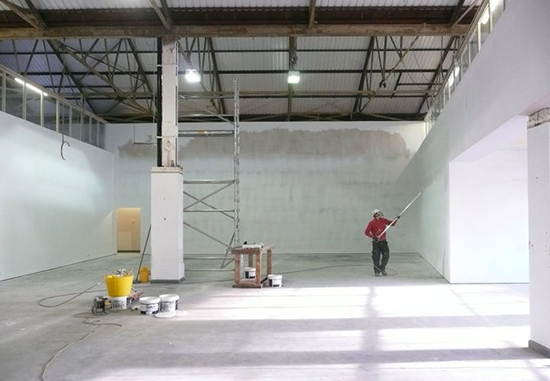
Renovations to Trafalgar House exhibition space, 2010. Image c/o S1 Artspace Facebook page
“The only things we didn’t do were the electrics and heating” (even though S1 removed the existing setup from the original space, refitting it in Trafalgar House with a plumber). “This was in the winter so we had to plough a path in the snow, from the courtyard across to the opposite site. It was baltic, there were no windows upstairs when we moved in. We worked from 8 in the morning till 9/10 at night, filling one-hour slots through a sign-up sheet everyday. Someone would bring in a big lunch on the weekend. Everyone felt really attached to the building. We came into the space in October, and we had our first show on the 10th December.”
Studio Culture
One of the largest tasks during renovation, and perhaps most gratifying (once it was complete!), was laying the parquet floor in the reception / reading room. As a token of the enduring process, every studio holder or staff member receives an original parquet piece with an engraving when they leave S1. This gesture is testament to a culture that has been prioritised from the start of S1, which Louise also acknowledged right at the start of the conversation: the integrity of the artist studios to the structure of S1, the studio holder’s shared responsibility with the organisation, and the promotion of a community in the studios through self-management and open plan production spaces.
Whilst scouting for alternative spaces, the structure of the studios was equally important as the accessibility to the gallery. What was achieved with Trafalgar House in terms of layout was the opening up of production and presentation space into one, as the studios upon the mezzanine overlooked the gallery below. The visible forefronting of the studio provision and open plan culture of S1 was also instated as an infrastructural necessity to the organisation, by incorporating the group of artists within the necessary fundraising duties and board decisions on a yearly basis. In order to keep the rent of the studios low, the studio holders are encouraged to raise up to £10,000 a year to sustain the overhead costs of the building. To offer the studios at a subsidised rate, the group must manage, administrate, recruit and fundraise, (“mostly through parties, a messy but quick and effective means to generate money”) by self-organising into small teams and planning for the year ahead. To some, this might appear too burdensome, yet seems appropriate to the way S1 is governed and the scale of its setup (with approximately 15 studio holders and 5 members of staff).
When Louise was interviewed for her job, there were two studio holders, and two trustees on the panel (both of whom were artists, as was Louise at the time). The emphasis to facilitate artistic production and dialogue is apparent everywhere in the way S1 operates, a reason why they identify themselves as artist-led, even if the gallery programme is more akin to a larger regional institution (many comparisons to Spike Island in Bristol), though Associate and Bursary exhibitions definitively form a more supportive programme to a local artistic community. Over the years, the studio holders, which are more like a semi-autonomous co-op, have included artists such as Haroon Mirza, Martin Clark, Ryan Mosley, Ivan Seal and now includes Anna McQuillan, Emily Musgrave and Mark Riddington (of Bloc Gallery), as well as the S1 Bursary Holders (in partnership with the Fine Art course at Sheffield Hallam University), and the Fine Art MA and PhD students too.
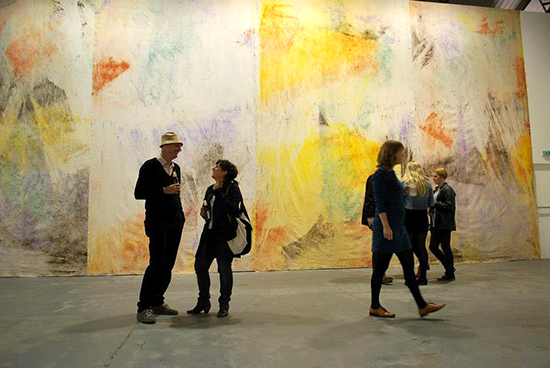
Preview of The Parallax Curtain, featuring Melissa Gordon, Emily Musgrave and Jessica Worboys, 2012. Image c/o S1 Artspace Facebook page
Regardless how tight or efficient an organisation can be coordinated, external negotiations and business deals can often detriment the plans of any commercially rented property. Within 2 months of the 5 year lease at Trafalgar House, the building was purchased by S1’s former landlord and owner of the neighbouring thrash metal nightclub. S1 was informed the current lease would be honoured, ie – they would not be evicted till their contract was up for renewal, but the omnipresent habits of the landlord presented another unpredictable attribute of S1’s legacy.
Resilient funding
There’s a number of reasons why S1 hasn’t succumb to the redevelopment plans around Sheffield, or the changes to government policy, aside from the determination of Louise’s long-term vision for the gallery and studios. Much like the budgeting approach adopted by KARST in Plymouth, S1 has largely sustained the programme through Arts Council England’s Grants for the Arts scheme. By relinquishing the financial security offered by ACE’s NPO scheme, a 3-year funding award, GfA’s funding enables organisations such as S1 to remain more responsive and adaptable to the work it wishes to present or the external climate at the time. A pay-off however is no organizational security and relentless funding which puts a huge strain on a small arts organisation.
That said, the period between 2010 to 2015 saw the exhibition programme diversify in terms of profiling new initiatives (younger artists through the Bursary Holders opportunity to recent graduates), to hosting New Contemporaries, which had not been hosted in Sheffield for 23 years. The presentation of solo shows by Nicholas Deshayes, Eva Berendes, Jennifer West and Michael Fullerton, alongside group exhibitions presenting artists such as Melissa Gordon, Emily Musgrave and Jessica Warboys, and guest curated shows by external curators including Rob Tufnell, Kyla McDonald and Laura McLean-Ferris, began to draw immediate parallels with other galleries across the UK showing similar artists.
“The organisation grew and attracted broader and wider audiences, promoted work by more emerging and established artists, and structurally became tighter. It was necessary to demonstrate the growing ambition of the organisation so we could gain support to help us in that next step. From day one when we moved into Trafalgar House, we began talking about the long-term ambition, we knew this was a move towards it but wasn’t the final step. We also had to keep adapting our model to stay afloat. If we’d kept to the same model, we’d have just closed.”
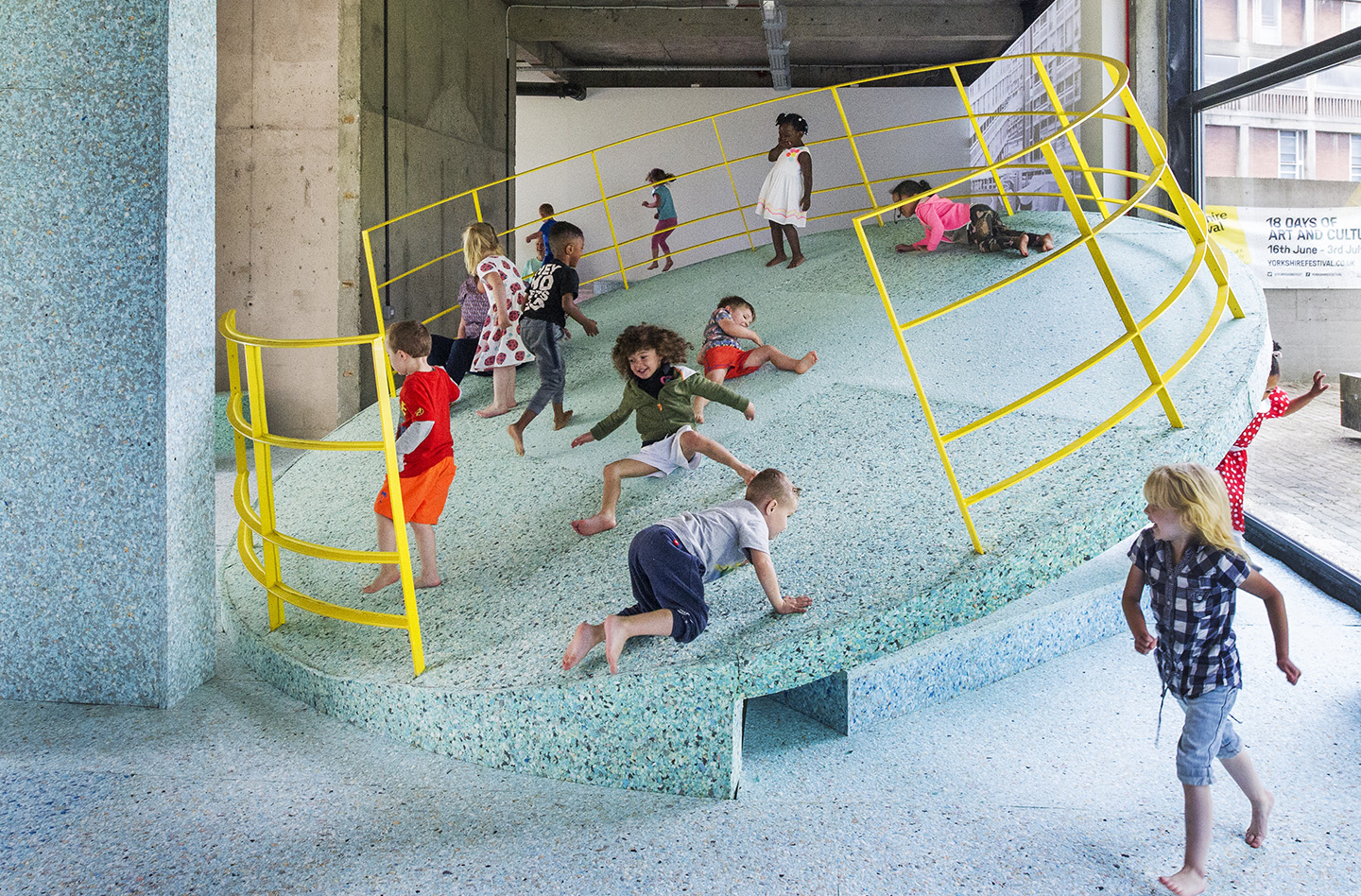
The Brutalist Playground, Assemble and Simon Terrill, S1 Artspace at Park Hill, 2016 (project originally commissioned by RIBA)
“Funding the programme and organizational overheads (including staff) through project funding has been extremely challenging. When you’re an NPO you’re given a certain level of stability you don’t have as a project-funded organisation, but you do however have flexibility which for S1 and all the changes we’ve gone through over the past few years has been absolutely necessary.” Key to Louise’s leadership is to “maintain relevancy.” By looking out for opportunities, being open to change and pragmatic to unaccountable changes around you, which are potentially impeding or undermining your business – whether that be economic crashes, difficult contracts, property redevelopment plans, or smoking bans – “can actually be an opportunity to harness a greater potential, as it might not be the same environment within a year,” as Louise identifies.
“It’s essential to start future proofing yourself against the changes in the funding climate we’re going through. I believe this has always been S1’s strength, to look forward, and be willing to change and adapt, partly through necessity and partly because collectively as an organization, S1 is willing to take the risk.”
In June 2015, S1 relocated to the Brutalist Park Hill estate. The Scottish Queen, a former pub on the estate is now the gallery and staff office, a stripped back concrete shell, which in the near future will return back to being a pub. Trafalgar House meanwhile remains as the studio premises with a newly appointed studio manager who in collaboration with Louise is already looking at ways to bring all the studios and commercial offices over to Park Hill. The previous gallery space is now occupied with further studios, and the reception area has been remodeled as a temporary project space programmed by the studio holders.
Future change
This of course, is not the intended final resting spot to run the gallery. Towering in the background, seen through the large office window where our conversation took place, is one of the large ex-council block of flats that currently lays dormant as Urban Splash’s development plans for the majority of the Park Hill site were put on hold by the global economic crash of 2008. Coming out of the crash, a new vision for Park Hill was beginning to emerge and from what could have been potentially ring-fenced for demolition, S1’s vision for the Duke Street wing of Park Hill has transformed its potential future into the incredibly ambitious capital project that occupies much of S1’s current time and energy.
Having an understanding of how the studio group co-manage themselves (and who are very present in the conversations about the potential future of the new site), and the governing structure of the organisation, means that a new and different programme will be developed at Park Hill over the coming capital development years. Next spring will see the official launch of Sculpture Park Hill, a new addition for S1, a 3.5 acre outdoor sculpture park situated within the Park Hill estate, and will undoubtedly feature as a prominent strand of the programme over the coming years.
Acquiring the 70,000sq ft Duke Street wing of Park Hill, means that S1 can, for the first time, work towards operating from a site it can develop as its own with a business model that can ride out uncertain times ahead.
With a projected launch date in 2021, the scale of this project is impressive, as is the building itself. The intention is to create a major flagship cultural destination in Sheffield, a gap widely acknowledged by the city’s cultural leaders. “There’s this huge community of artists and creatives in Sheffield, but the city doesn’t have an infrastructure that reflects it particularly if you compare it to Liverpool, Leeds, Nottingham or Manchester. Sheffield’s strength is predominantly with its grassroots and medium scale organisations; it has very few large-scale venues that bring in audiences from outside of the city.”
“The vision for Park Hill is to create a new large gallery space that retains the architectural characteristics of Trafalgar House by knocking through floors to offer an artist studio mezzanine level that continues to open up the space between production and presentation. In addition to the gallery and studios, the building will also accommodate a dedicated education space, an auditorium, research center, the country’s first post-war architectural archive, production workshops, creative workspace, live/work flats, café and shop.”
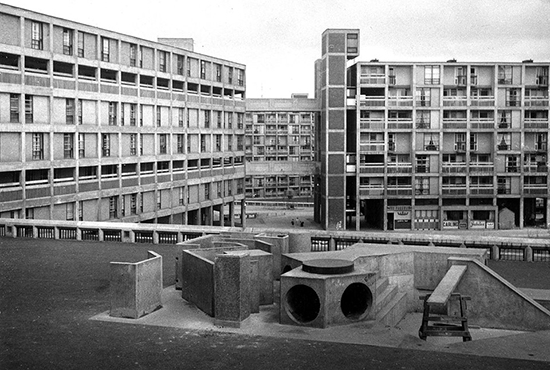
Archive image of Park Hill estate, Sheffield, c1960's. Image c/o S1 Artspace Facebook page
To realise this, S1 have to raise £21 million to redevelop the site. £1 million has been committed by HM Treasury and S1 are now well underway fundraising for the next stage.
The fact that the legacy of S1 is long is testament to the strength of sustaining and expanding an organisation over multiple locations, against multiple restrictions and retractions, and through multiple accounts and perspectives. There is no doubt that this has been possible by formalising early, resisting the NPO trend, and constant determined resilience. The fact that the studio practice has continually been forefronted, and those artists have had an integral role in the steering of the organisation, places agency both in the importance of art-making and decision-making by those most invested. I can’t imagine many directors working as closely with studio tenants whilst relocating and reforming the identity of the organisation. Whilst it appears new measures are being introduced in England to increase the ‘value’ of the arts through Quality Metrics, it’s so refreshing to witness a local community of artists be the ones who are heard and their work be made visible within the growth of an organisation. It’s the tracing of that growth that is so vital right now as a counter-narrative to the arts sector in the UK of the past 8 years, which could see a grassroots organisation of 21-years ago own their means of production and cement themselves as one of the country’s major arts venues.
Doggerland: Was it not a really problematic time to come in, when you were appointed Director back in 2006, above the nightclub, or in 2010 once you knew Trafalgar House had been purchased by your old landlord? – “…It was difficult yes, but I think no matter where you are you always have challenges to deal with, but what I did think was that there was this amazing opportunity at S1, there was so much scope about what we could do, and given that the studio holders, staff and board have been incredibly supportive throughout all these changes and uncertain times – that was the appeal. S1 gets under your skin a bit, people stay for years, there’s a sense of family (albeit a dysfunctional one at times) within the organisation.”
Tom Prater